
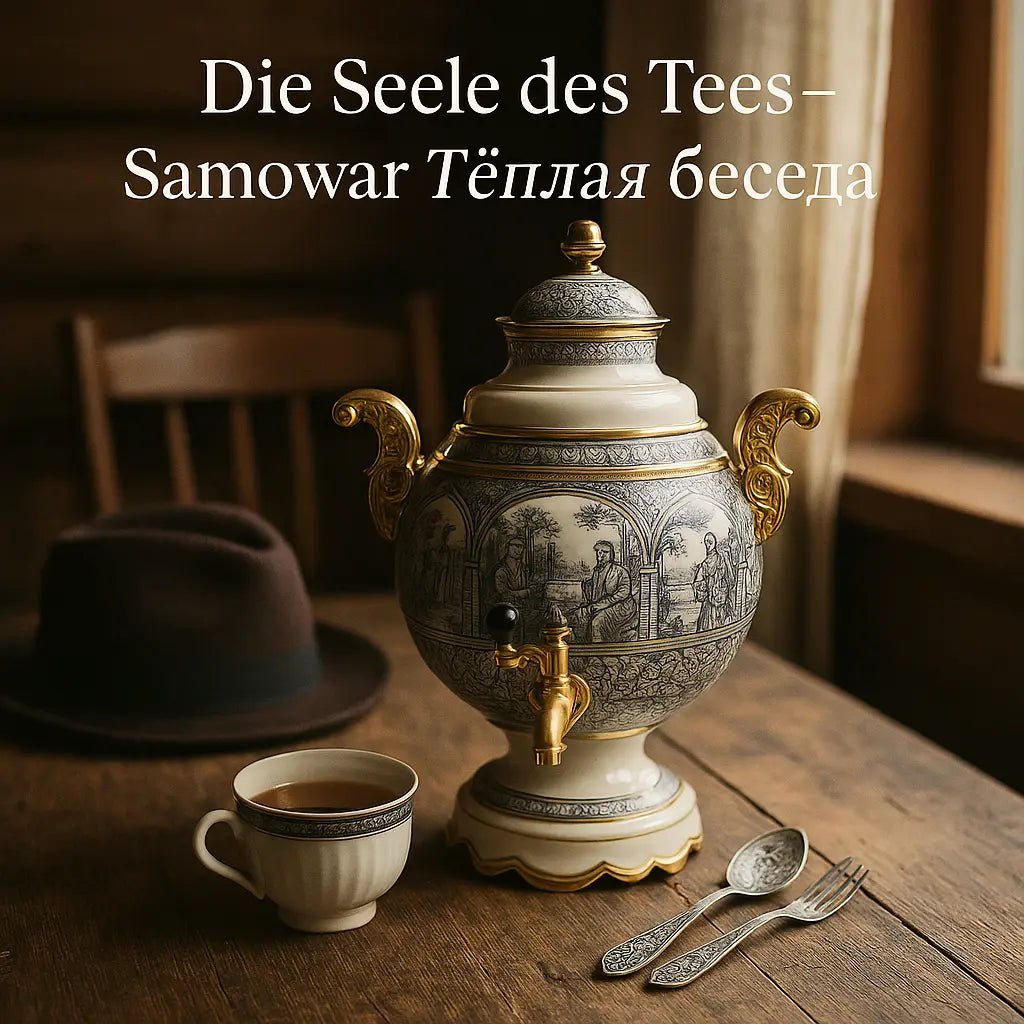
The Soul of Tea: Why the Samovar is More Than Just a Water Boiler
There are objects that transcend their function. The samovar is one of them. In Russia, it has been more than just a water-boiling device since the 18th century — it is the heart of the home, a gathering point, a silent promise of community. Anyone who knows the history of the samovar understands the Russian soul a little better.
Tula: The Cradle of the Samovar
The city of Tula, about 170 kilometers south of Moscow, is considered the birthplace of the Russian samovar tradition. Here, where metal craftsmen have perfected their skills for centuries, a device was created in the 18th century that would shape the tea culture of an entire country. The word samovar is composed of the Russian words samo (self) and warit (to boil) — a self-boiler that heated water using coal, wood, or embers inside.
But the samovar was never just a technical device. It was an expression of hospitality. When guests arrived, the samovar was fired up. Its quiet humming signaled: This is a place of warmth; you are welcome to stay. In an age without telephones or social media, the samovar was what brought people together — over a glass of tea, a lump of sugar, and a long conversation.
From Utensil to Work of Art
In the 19th century, the samovar began its transformation from a functional household appliance into a prestigious art object. Wealthy families ordered samovars made of silver and gilded metal, decorated with engravings, coats of arms, and floral ornaments. The best goldsmiths competed to create the most elaborate designs.
The combination of silver and the niello technique, in particular, made these pieces extraordinary. Niello — a dark alloy — is fused into previously engraved recesses. The result is a dramatic contrast: deep black ornaments against shimmering silver. In the SevChern workshop, such a piece undergoes around 15 manual steps. Only a few workshops still master this refinement — making the pieces created there today all the more valuable.
Samovar Culture in Silver: What Finds Its Way to the Table Today
Large, solid silver samovars were individual pieces for a few households during the Tsarist era — and remain so today. However, the culture behind them lives on in many pieces that are actually used. The "Waxwing" water kettle made of 925 silver is, in a sense, the modern relative of the samovar: a whistling kettle with a capacity of about 2.6 liters, a niello frieze of scrolls and foliage around its body, and a handle made of precious wood. For those who prefer to keep the image of the samovar in a display case, there is the decorative samovar composition — a mini-samovar with two cups and a tray made of gilded 925 silver with blue enamel.
And then there are the pieces that had their place around the samovar: silver teapots for the strong zavarka (tea concentrate), tea glass holders for the glass of tea, silver spoons, and sugar bowls. Our niello pieces are crafted by SevChern in Veliky Ustyug, following the Veliky Ustyug niello tradition dating back to 1683.
Russian Tea Culture: More Than Just a Hot Drink
Russian tea culture differs fundamentally from British or Japanese traditions. In Russia, tea is often served not in cups but in glasses — held by a tea glass holder (podstakannik). The samovar is at the center of this: it keeps the water at the right temperature while a small teapot with concentrated zavarka rests on its crown. Each guest dilutes their own tea to their preferred strength — an act of self-determination amidst the company of others.
This was accompanied by silver teaspoons, sugar bowls, and often artfully designed silver trays on which pastries and jam were served. A fully set tea table with a samovar was a sign of the highest hospitality — and an expression of style and refinement.
Tea Culture in Silver as an Heirloom Gift
A silver water kettle, a niello teapot, or a tea glass holder is not a disposable item. Such pieces are generational gifts — they carry stories within them and collect new ones. Given for a silver wedding anniversary, they become a symbol of a shared journey. Presented as a VIP gift, they show appreciation. In a collection, they become a centerpiece.
Anyone who places such a piece on the table presents more than just an object. They extend an invitation: Sit down. Stay a while. The tea is hot, and the stories can begin.
Russian Tea Tradition
Discover Coffee & Tea Sets in 925 Silver
Teapots, tea glass holders, teaspoons, and more in 925 silver
Discover CollectionFrequently Asked Questions about the Silver Samovar
What is a samovar and where does it come from?
A samovar is a traditional Russian device for heating water for tea preparation. The name means "self-boiler." It originated in the 18th century in the city of Tula, which is still considered the center of samovar production. Originally heated with coal, it served as the focal point of domestic socializing.
Why is silver tea service with niello particularly valuable?
At SevChern, a niello piece undergoes around 15 manual work steps. Niello is a dark alloy that is fused into engraved ornaments using an open flame, creating the characteristic contrast of black and silver. Only a few workshops still master this technique. Read more in Niello Technique Explained.
For which occasions is silver tea service a suitable gift?
A water kettle, teapot, or tea glass holder made of silver is suitable for a silver wedding anniversary, a company jubilee, or a milestone birthday, and serves as a prestigious gift for tea lovers. Since such pieces last for generations, they also make excellent family heirlooms. Our article 925 Silver Niello Water Kettle tells the story of how this kettle was created.
Perfect for: Silver Anniversary · Company Jubilee · Tea Lovers · Collectors
Pieces: Water Kettles · Teapots · Tea Glass Holders · Samovar Composition
Material: 925 Sterling Silver · Niello · Partial Gold Plating
Personalization: Engraving & SilberVerse card upon request