
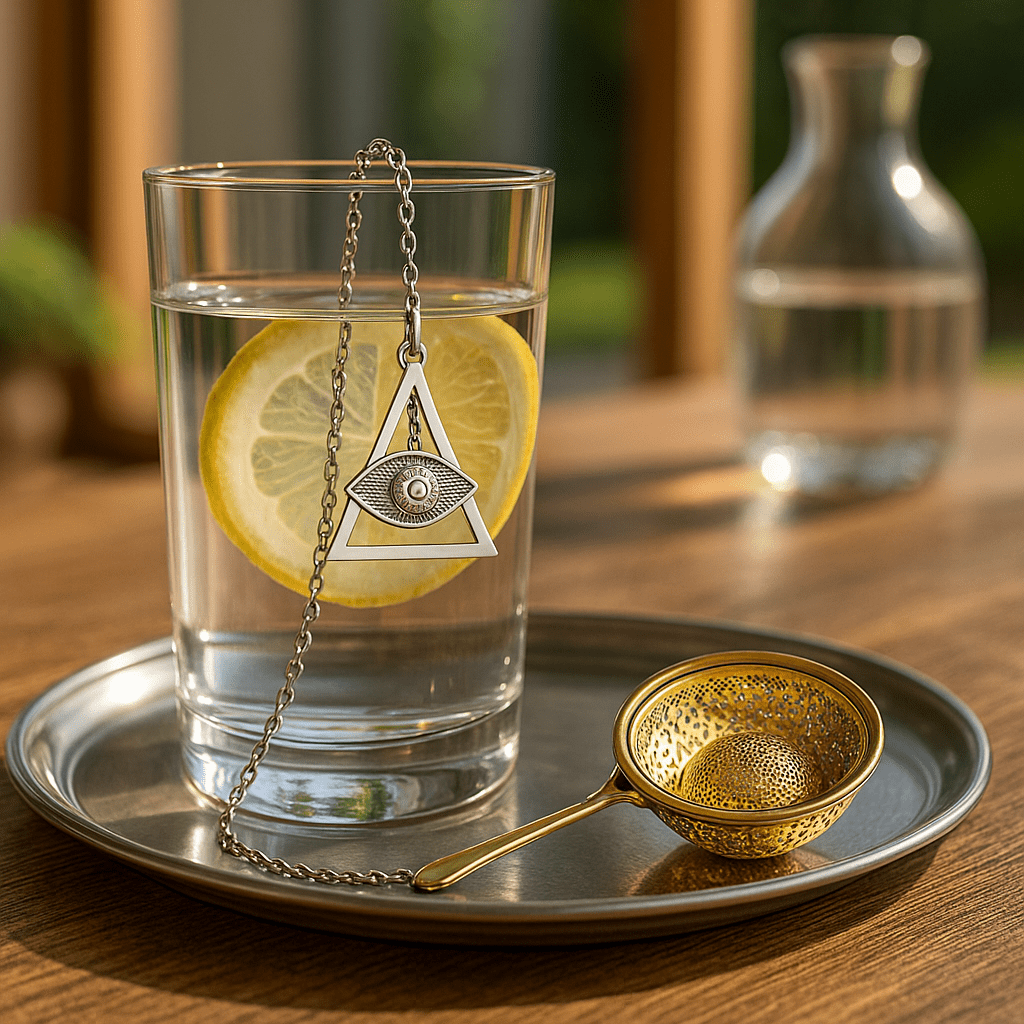
A two-centimeter silver pendant looks as if it were made in one piece. In reality, it passes through several hands before it ends up in the gift box. This article follows the journey from model to finished piece – using the SilberKlar series, thirteen figural pendants made of 925 sterling silver, as an example.
Why Figural Miniatures Are Challenging
With a smooth ring or a simple chain, the polish determines the effect. With a figure, the shape is what matters. A pike must be recognizable as a pike, even though it measures barely two centimeters; a rose needs petals that stand out from each other without the depressions filling in. The smaller the motif, the less room there is between too crude and too fine.
Therefore, the series has remained modest in size: the motif measures one and a half to two centimeters, the chain 25 to 27.5 centimeters, and the weight is between ten and nineteen grams. Enough material for the form to hold – little enough that the pendant does not interfere with a carafe.
Casting in Individual Molds
The series is manufactured by ArgentA, a manufactory with its own line for figural miniatures. Each motif has its own mold into which the liquid silver is poured. What comes out of the mold afterward is not yet a finished piece: there is material at the seams that does not belong there, the surface is dull, fine details are sketched but not elaborated.
What the Hand Does Afterward
The longer part of the work is the finishing. Deburring means removing the casting seams without damaging the form. Filing is done where an edge has turned out too soft. Polishing is done in several passes, from coarse to fine, until the raised surfaces have the shine expected of silver.
Because this step is done individually for each piece, no two pendants of the same motif are ever completely identical. The notch on the edge of one is a trace deeper, the surface of the other a trace brighter. In serial casting, this would be a defect. In handmade work, it is a distinguishing feature – and the reason why such a piece feels different in hand than a machine-made one.
925 Sterling Silver – and Why Not More
Fine silver would be too soft for a pendant: fine points would bend, edges would quickly dull. Therefore, it is alloyed. 925 Sterling Silver consists of 92.5 percent fine silver; alloying gives it enough hardness for everyday use without the material losing its character. The hallmark on the piece indicates this fineness; in the SilberKlar series, the motif and chain bear the same hallmark.
The Design and Its Name
The term "Water Refresher" is traditional and in the Russian silver tradition accurately describes this design: a figural pendant on a chain, which is hung over the rim of a carafe while the motif remains visible. We continue to use the name as a product designation because it belongs to the series. The pieces themselves are jewelry and collector's items made of 925 silver.
How to Treat Such a Piece
After use, rinse under running water and dry with a soft cloth. Silver darkens over time – this is not a defect, but the normal course of things. A silver polishing cloth restores the shine in seconds. For finely crafted motifs, it is worthwhile to spare the depressions: the contrast between light and dark areas is what makes the form legible. Store dry and as airtight as possible.
Frequently Asked Questions
Why do two pieces of the same motif differ?
Because each is individually hand-finished. Casting alone does not result in a finished piece – deburring, filing, and polishing are done by hand, and nuances arise in the process.
How do I recognize real Sterling Silver?
By the hallmark. 925 stands for 92.5 percent fine silver. In the SilberKlar series, the pendant and chain bear the same marking.
How long is the chain?
Depending on the model, about 25 to 27.5 centimeters – enough to hang the pendant over the rim of standard carafes and bottles.
The entire series is available under SilberKlar — Pendants on Chain made of 925 Silver. Those interested in small silver works can find more under Home Accessories made of Silver, and under Carafes & Pitchers the matching vessels.